Sealed Discharge. No Bridging. Every Last Pound.

Bulk Bag Unloaders for Every Powder and Bulk Solid

Heavy-duty FIBC discharging stations for food and dairy processors, chemical and plastics plants, cement and minerals operations, and pharmaceutical manufacturers. Bags empty completely and the dust stays inside the equipment, not in the room.

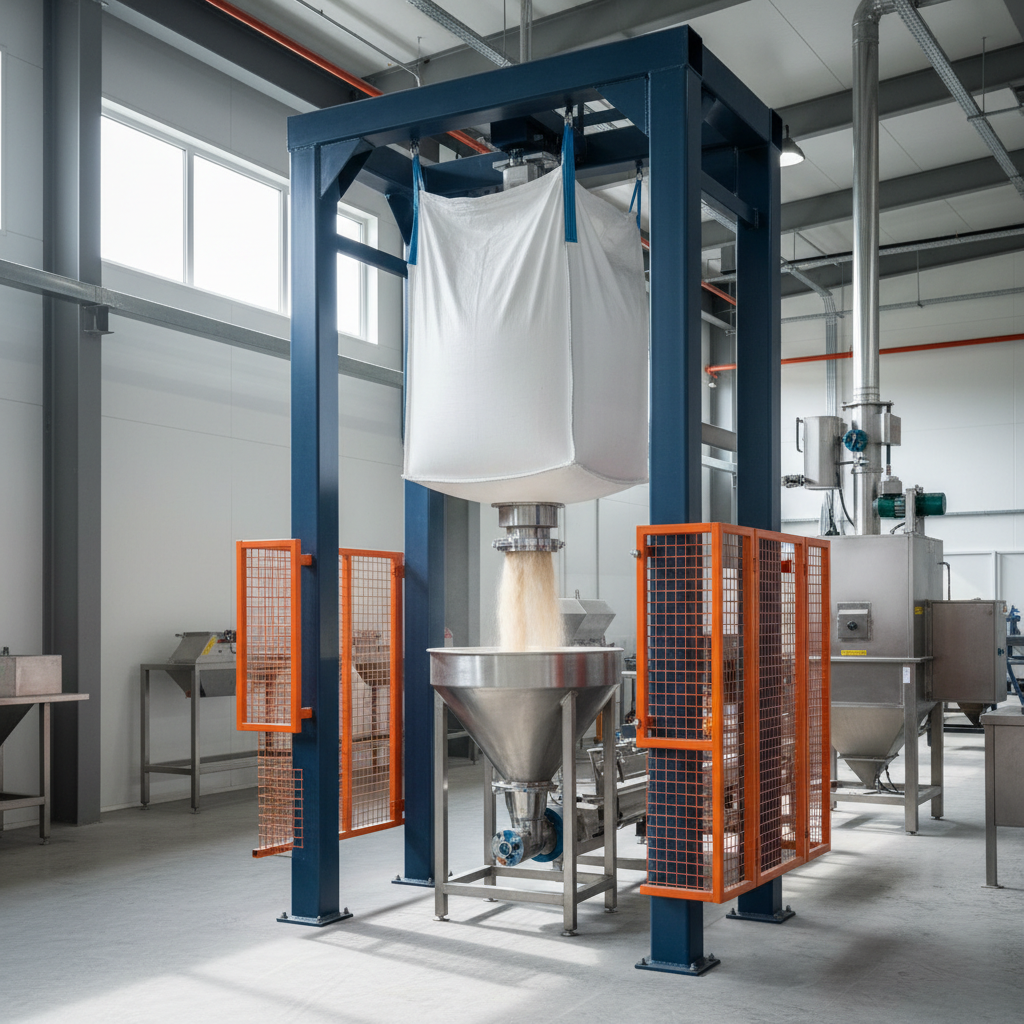
A bulk bag suspended in a steel unloading frame discharging powder into a hopper below

The basics

What a bulk bag unloader actually does

A bulk bag unloader holds a filled FIBC — a flexible intermediate bulk container, known on most plant floors as a bulk bag or a super sack — in a frame so its contents can be released into a process below in a controlled way. The bags run from roughly 500 to 4,000 lb, which is why the equipment exists at all: nobody is handling that by tipping.

The frame is the visible part, but it is rarely the part that decides whether the station works. Three other things do. The bag has to get into the frame, which is either a forklift job or a hoist job and drives most of the cost difference between stations. The material has to keep flowing once the spout is open, which is a question about bridging and about how the material has been stored. And the dust has to stay inside the equipment, which is where the spout connection either does its job or does not.

Get those three right and a station discharges a bag cleanly in a few minutes and leaves almost nothing behind. Get them wrong and you have an expensive frame that operators fight with, a material that arches over the spout while the bag still looks half full, and a fine layer of product on every surface in the room.
Frame configurations

Six ways a station gets the bag off the floor

How the bag is loaded is the first decision and it constrains everything after it — floor space, headroom, forklift traffic and price. These are the arrangements you will be quoted.

Half-frame (cantilever)

Forklift loads the bag from the front

The lightest and least expensive station. An open cantilever frame lets a forklift carry the bag in from the front and set it on the support arms, so there is no hoist to buy or maintain. Needs clear forklift access and enough aisle in front of the station.

Full frame with hoist and trolley

Self-contained lifting, no forklift at the station

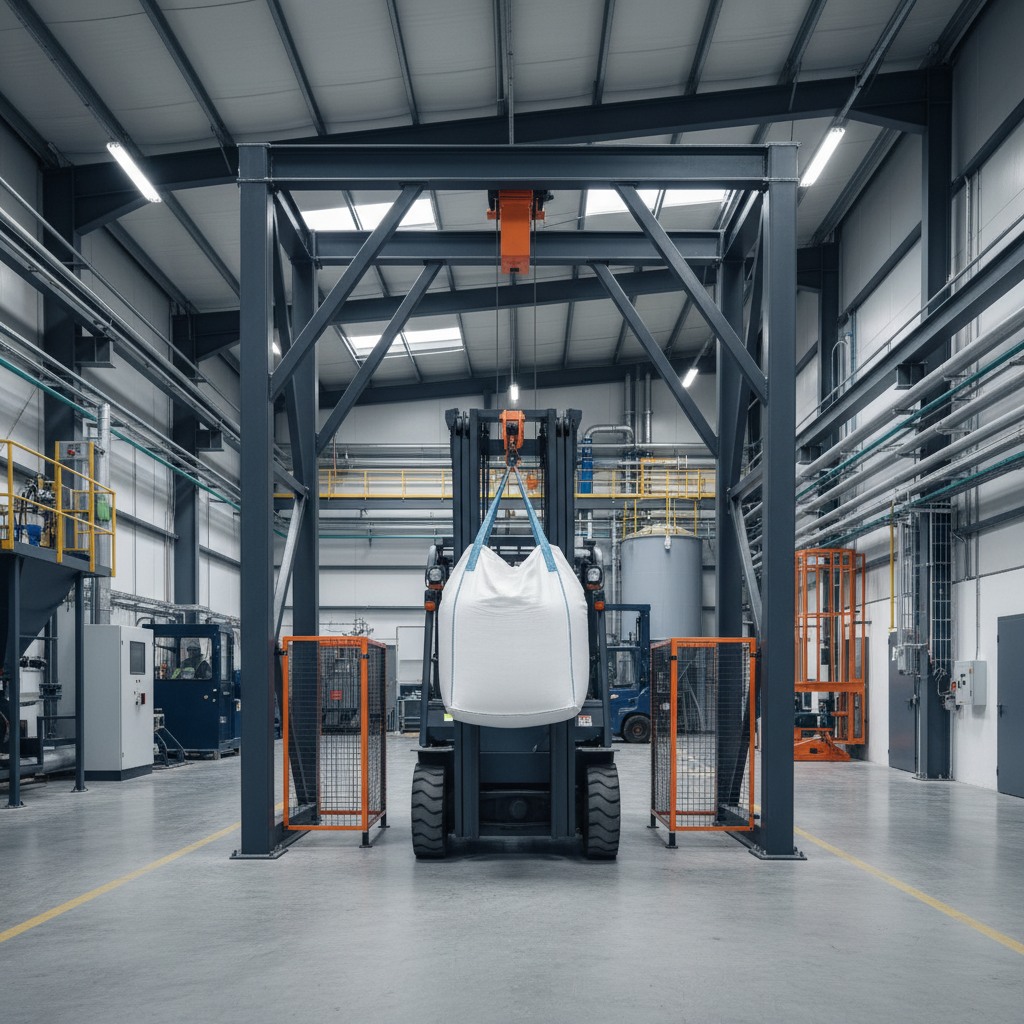
An enclosed frame with its own electric or pneumatic hoist running on a trolley beam. The forklift drops bags at a staging point and the station handles the lift, which frees the truck and keeps traffic out of the discharge area. The usual choice where bags run continuously.

Forklift-loaded receiving frame

A frame the truck loads directly

A fixed frame with a removable or hinged cross member that the forklift lowers the bag onto. Cheaper than a hoist station and faster than a cantilever for tall bags, but it ties up a truck for every bag change.

Split or opening frame

For low headroom

The frame opens or the top beam swings clear so a bag can be brought in sideways rather than lifted over the top. This is the answer when ceiling height will not allow a bag to clear the frame, which is common in retrofits and mezzanine installations.

Telescoping frame

One station, several bag heights

The upper frame extends and locks at height, so a single station handles both short 35 in bags and tall 60 in bags without leaving slack fabric or overstretching the loops. Useful where bag suppliers change or where the plant runs several materials.

Integrated discharge system

Unloader plus the conveying that follows it

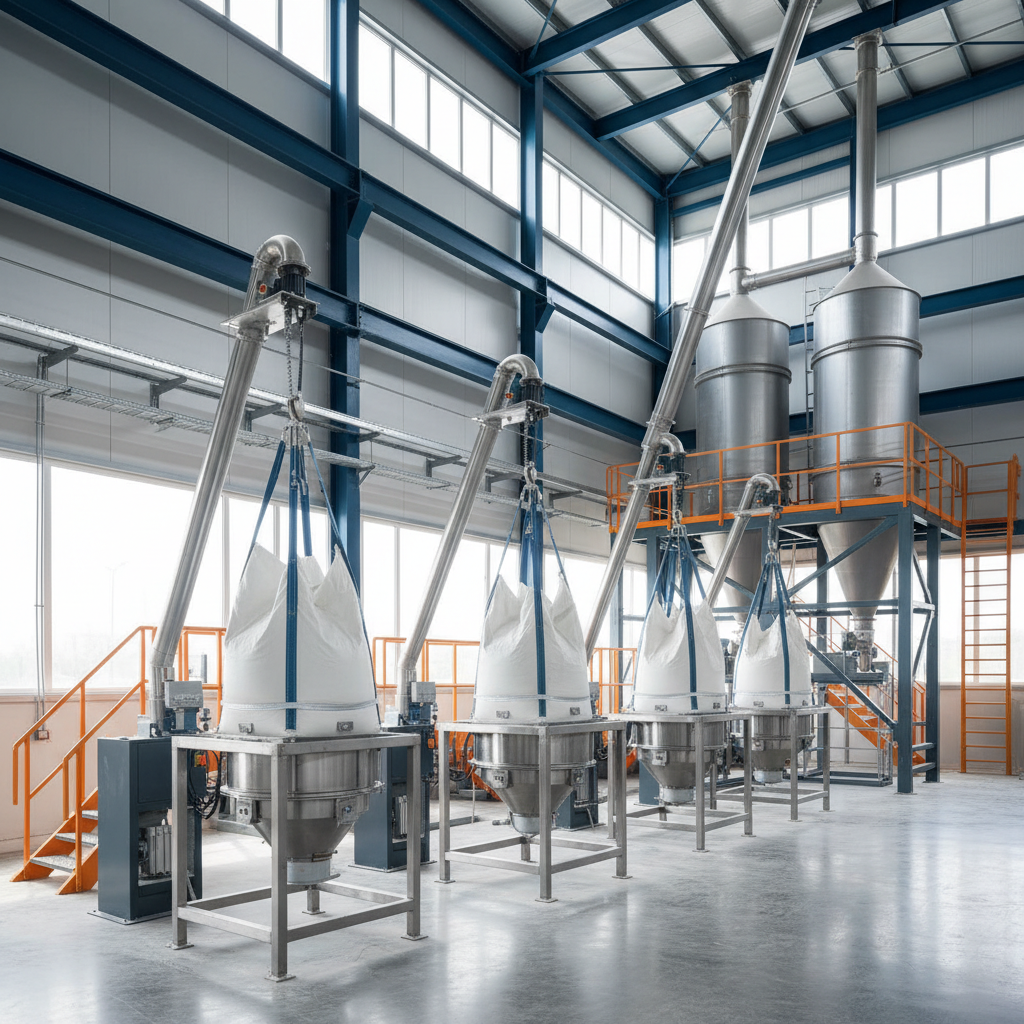
The frame arrives married to what comes next: a flexible screw or pneumatic conveyor, a weigh hopper, a bag-dump station for hand-add minors, or a surge hopper with a rotary valve. Bought as one system with one point of responsibility for performance.

A full-frame bulk bag unloading station with an electric hoist and trolley beam
An open cantilever half-frame unloader arranged for forklift loading from the front

Flow promotion & containment

Making the material leave the bag

A frame on its own will discharge a free-flowing granule perfectly well. Everything else — anything cohesive, hygroscopic, or that has sat in a warehouse through a humid month — needs help, and the help has to match the way that particular material fails.

Massage paddles

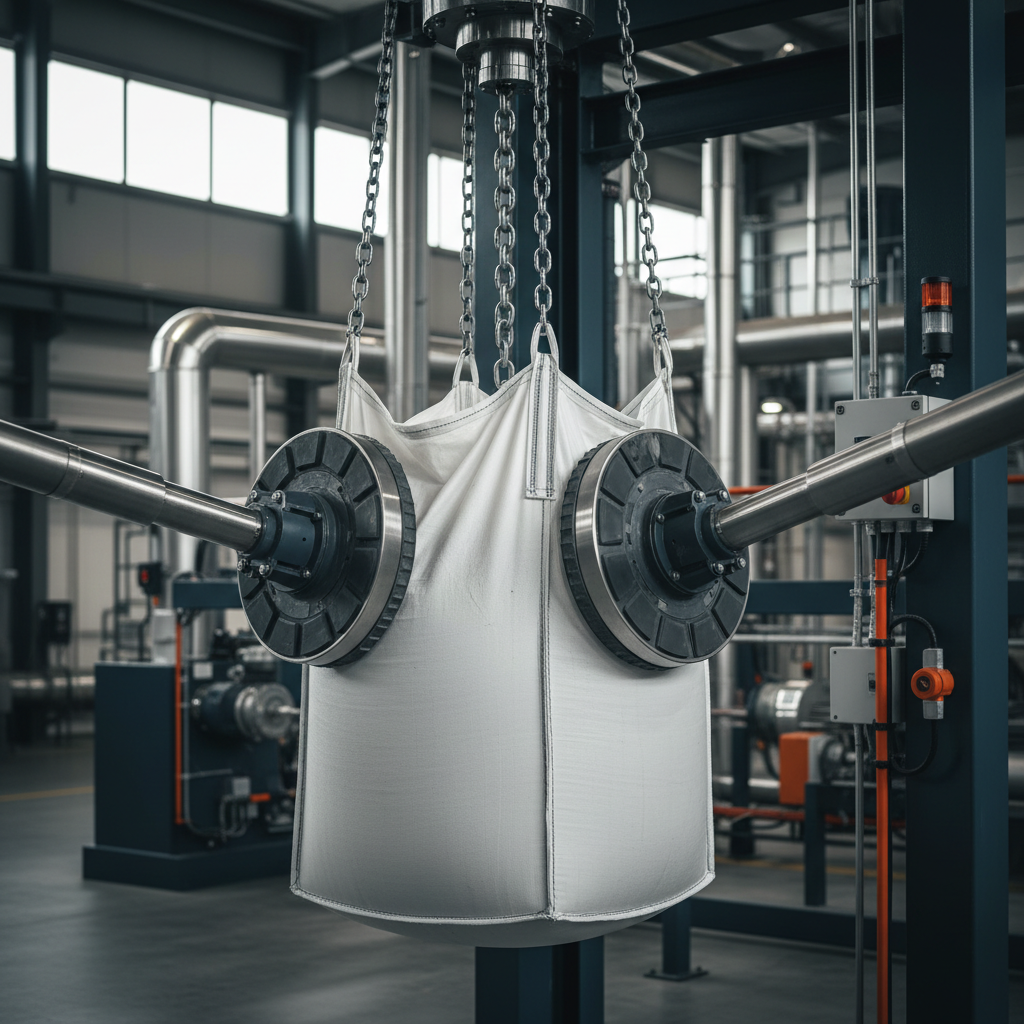
Powered paddles squeeze the lower third of the bag on a timed cycle, breaking the arch that forms above the spout. The standard first answer for powders that pack in storage.

Frame or hopper vibration

A vibrator on the support frame or the receiving hopper keeps material moving into the outlet. Effective on granular material, and generally the wrong tool for a fine cohesive powder, which it can compact further.

Bag agitation arms

Arms lift and drop the bag body itself, working the material loose from higher up. Used where bridging forms well above the spout rather than at it.

Spout access box

A sealed glovebox around the spout so an operator can untie, retie and part-empty a bag without releasing dust into the room. The single most important element on any station handling a hazardous or respirable material.

Iris valve or spout clamp

Closes around the bag spout to throttle or stop flow, which is what lets an operator part-discharge a bag, close it and return it to storage rather than committing the whole bag to the process.

Bag flattening or tensioning

A powered lower frame pulls the bag downward as it empties, keeping the fabric taut so the last of the material runs to the spout instead of settling into folds. This is usually what separates a station that empties a bag from one that leaves 20 lb behind.

Massage paddles fitted to the lower body of a suspended bulk bag to break material bridging

The usual mistake

Specifying flow aids from a catalogue instead of from the material. Vibration is the default answer on most quotes and it is the wrong one for fine cohesive powders, which it compacts. Describe how your material behaves after a month in storage and the right combination becomes obvious.

Applications

What the industry changes about the specification

The frame looks similar across sectors. What differs is which constraint governs — and the governing constraint is what you should lead with when you ask for a quote.

Food, dairy and beverage

Flour, sugar, milk powder, starches and blends. Drives stainless contact surfaces, crevice-free welds, tool-free disassembly for washdown, and often a full USDA or 3-A specification. Allergen changeover usually decides how the station is built.

Chemical, plastics and coatings

Resins, pigments, additives and compounds. Frequently combustible dust, so the specification runs to grounding and bonding, static-dissipative liners, and equipment suited to the classified area. Abrasive fillers push toward hardened or lined contact points.

Cement, minerals and construction products

Sand, silica, fly ash, dry mortars. Heavy bags, abrasive material and high throughput. Frames are rated well above nominal bag weight, and dust control is a silica exposure question, not a housekeeping one.

Pharmaceutical and nutraceutical

APIs, excipients and blends where operator exposure is the governing constraint. Drives contained transfer at the spout, split butterfly valves, documented containment performance, and surface finishes specified in Ra rather than described in words.

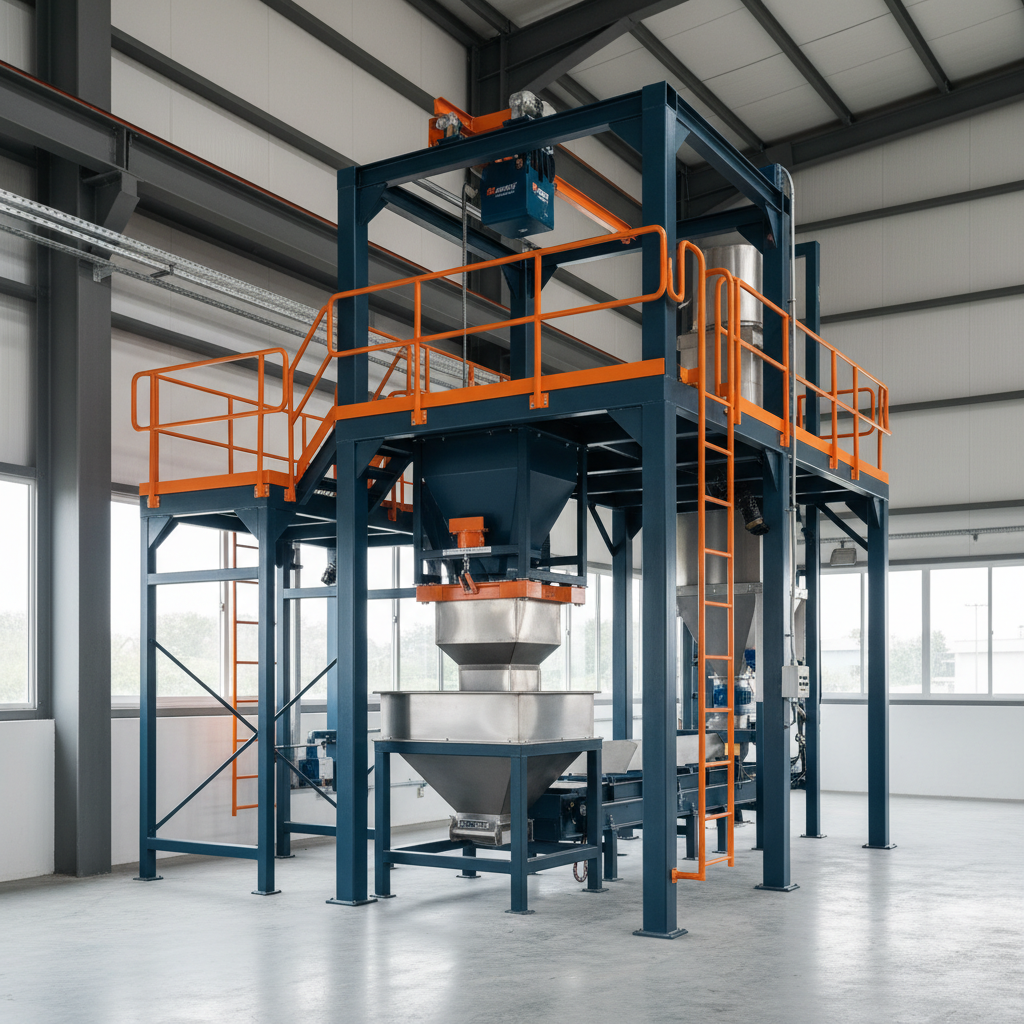
A processing plant interior with bulk bag discharging equipment feeding downstream conveying

Specifying a station

Eight things to settle before you ask for a quote

Most quoting delays and most disappointing installations trace back to one of these being assumed rather than stated. Answer them and any competent supplier can price the job accurately the first time.

DecideWhy it drives the design
Bag size, weight and loop styleFilled height, base dimensions, gross weight, and whether bags arrive with four corner loops, a single lift loop or a sleeve. The frame has to suit the tallest bag you actually receive, not the nominal one.
How the bag reaches the frameForklift into a cantilever, forklift onto a fixed frame, or hoist and trolley from a staging point. This decision drives the frame type, the floor space and most of the price difference between stations.
Material behaviourFree-flowing, cohesive, hygroscopic, abrasive or prone to packing in storage. This is what determines which flow aids are genuinely needed rather than optional, and it is the most common thing left out of an enquiry.
Dust containment levelOpen discharge, a dust-collection connection, a sealed spout access box, or contained transfer with a split valve. Set by the material's exposure limit and by whether operators are in the room during discharge.
Discharge rate and duty cycleBags per hour and hours per day. Continuous duty pushes toward a hoist station with staged bags; two bags a shift rarely justifies one.
Headroom and floor spaceClear height from floor to the lowest obstruction, which decides whether a bag can be lifted over the frame or whether you need a split or telescoping design. Measure to sprinklers and services, not to the deck.
What happens downstreamGravity into a hopper, a flexible screw, a pneumatic line, a weigh vessel or a mixer. Buying the unloader and the conveying separately is where most performance disputes start.
Partial bag handlingWhether operators need to close a part-used bag and return it to storage. If they do, an iris valve or spout clamp is not an accessory, it is the requirement.

Questions

Common questions about bulk bag unloaders

What is the difference between a bulk bag unloader and a bag dump station?

A bulk bag unloader discharges a full FIBC, typically 500 to 4,000 lb, suspended in a frame. A bag dump station is a hopper with a grate and dust control where an operator manually tips 25 to 50 lb sacks. Plants that run both usually put a small bag dump station alongside the unloader so minors can be hand-added into the same process.

Why does material stop flowing partway through a bag?

Almost always bridging: the material forms a stable arch over the spout and stops feeding while the bag still looks full. Powders that have been stored, vibrated in transport, or exposed to humidity are the usual offenders. Massage paddles at the lower body of the bag are the normal fix; frame vibration alone can make a cohesive powder worse by compacting it further.

How much material is left in the bag after discharge?

A station without any bag tensioning commonly leaves material sitting in the folds of the fabric at the base. Powered bag flattening or a lower tensioning frame pulls the bag taut as it empties so the residue runs to the spout. On expensive material this feature usually pays for itself, and on allergen or potent material the residue is a cleaning problem as much as a cost one.

Do I need a hoist, or will a forklift do?

A forklift is fine if you are running a few bags a shift and have the truck and the aisle space to spare. Once you are staging bags continuously, tying up a forklift for every bag change costs more in labour and traffic than the hoist does, and it puts a moving truck in the discharge area.

What is a spout access box and when is it required?

It is a sealed enclosure around the bag spout with glove ports, so an operator can untie the spout, connect it, and retie a partial bag without dust escaping into the room. It becomes a requirement rather than an option when the material has a low occupational exposure limit, is a respirable crystalline silica risk, or is an allergen where cross-contamination matters.

Can one station handle different bag heights?

A telescoping frame is designed exactly for this: the upper section extends and locks so both short and tall bags hang correctly without slack fabric or overstretched loops. Fixed frames sized for the tallest bag will work with shorter ones, but the slack fabric interferes with flow and makes tensioning less effective.

What does combustible dust change about the specification?

It moves the conversation from housekeeping to ignition control: bonding and grounding of the frame, bag and receiving hopper, static-dissipative or conductive FIBC types matched to the equipment, motors and controls suited to the classified area, and coordination with whatever dust collection serves the station. It is a plant-wide question, so it belongs in the enquiry rather than in a change order later.

How much floor space does a station need?

Less than most people plan for at the frame itself, and more than they plan for around it. The frame footprint is only part of it: you need forklift approach, room to stage full and empty bags, access for the operator at the spout, and clearance for whatever conveys the material away. Headroom is usually the binding constraint, not floor area.

Stainless or carbon steel?

Carbon steel with an industrial coating is normal for cement, minerals and many chemical applications. Stainless becomes the answer where the material contacts food or pharmaceutical product, where washdown is routine, or where the material or the environment is corrosive. The distinction that matters more than the alloy is which surfaces actually touch product.

Should the unloader and the conveying be bought together?

Usually yes. Discharge rate is a property of the whole path, not of the frame, so when the unloader and the conveyor come from different suppliers and the system underperforms, each points at the other. A single supplier for the station and the transfer that follows it gives you one performance number and one party responsible for it.

Get in touch

Tell us what you are discharging

Send the material, the bag size and weight, how bags arrive at the station, and whether the material packs or bridges in storage. That is enough for a supplier to come back with a real configuration rather than a catalogue page.

Enquiries are passed to manufacturers and suppliers who build this equipment, so you can expect to hear from a company that can actually quote the job.

We use what you submit to respond to your enquiry, which can include sharing it with suppliers who can quote your request. We never sell your information. See our privacy notice.